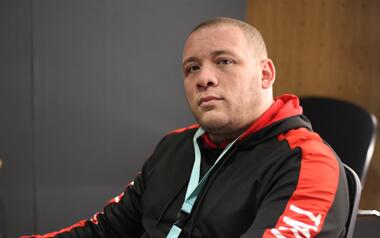
Vasaris Gutauskas.
Vasaris is a Spirit Studios graduate and Head of Radio Engineering at LRT with experience spanning music production, audio engineering, live sound and broadcasting.

After graduating from Spirit Studios’ Music Production degree, Vasaris has quickly built an impressive career across audio engineering, live sound and broadcasting.
Originally from Lithuania, he combined his studies with freelance work in music production, mixing, mastering, event organisation and live audio engineering, developing a broad range of technical skills along the way.
Today, Vasaris is Head of Radio Engineering at Lithuanian National Radio and Television (LRT), where he oversees the technical delivery of broadcast content on a national scale. In this interview, he reflects on his journey from student to broadcast leader, shares insights into the world of radio engineering, and offers advice for students looking to build a career in the audio industry.
How did you discover Spirit Studios and what made you study here?
After finishing a Music Production foundation year at School of Electronic Music in Manchester, I was looking for a place to continue my studies without leaving the city. Some tutors and fellow students recommended to check out Spirit Studios, so I did, and went to meet up some of the staff before applying.
The place immediately felt unique.
The whole building is focused on music and audio, which felt like a very dedicated environment to learn in. That gave me huge confidence in my decision, because I understood that focus was entirely on Music/Audio related studies, surrounded by people with the same passion and goals.
How did your time studying Music Production at Spirit Studios help prepare you for your career?
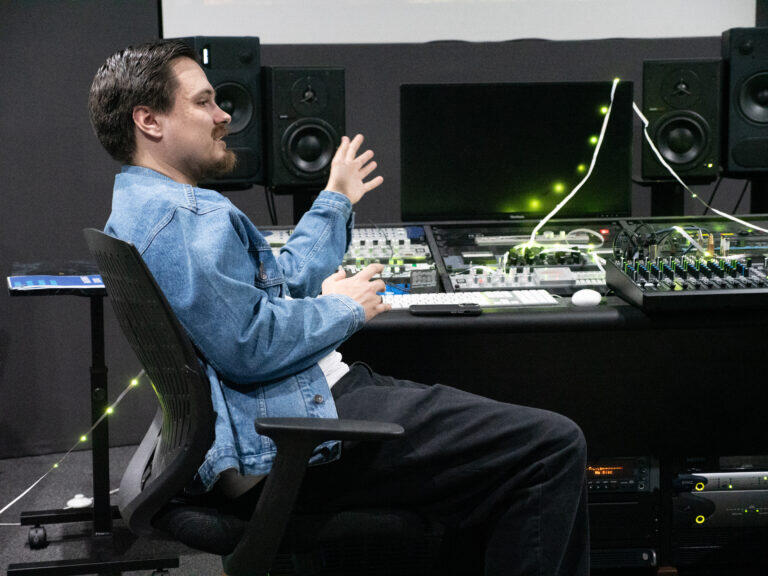
My time studying Music Production at Spirit Studios helped me build a strong understanding of professional audio workflows, DAWs, analog and digital mixing desks, recording, mixing, mastering, and critical listening. The course was very hands-on, which gave me valuable experience working in professional studio environments and helped me become more confident technically and creatively.
It also helped me develop important skills like consistency, collaboration, communication, problem-solving, and attention to detail, all of which became essential later in my work across music production, live audio, and broadcasting.
What were the first steps you took after graduating to build your career in audio engineering and broadcasting?
After graduating, I focused on getting as much practical experience as possible. During the summers, I would come back to my hometown in Lithuania and work as an audio engineer at a local culture centre, where most of the town’s major live events took place. That experience helped me improve my technical skills in live sound, problem-solving, and working under pressure.
It also allowed me to meet great people with similar mindsets, which led to collaborations on studio projects, live gigs, and other creative events.
After moving back to Lithuania full-time, I moved to the capital Vilnius, continued working on freelance projects, helped out in various analog studios, rented my own studio space, and kept building experience wherever opportunities appeared. That time gave me a strong practical foundation that later helped me transition into broadcasting and audiovisual engineering.
You’re now Head of Radio Engineering at Lithuanian National Radio and Television. What does your role involve?
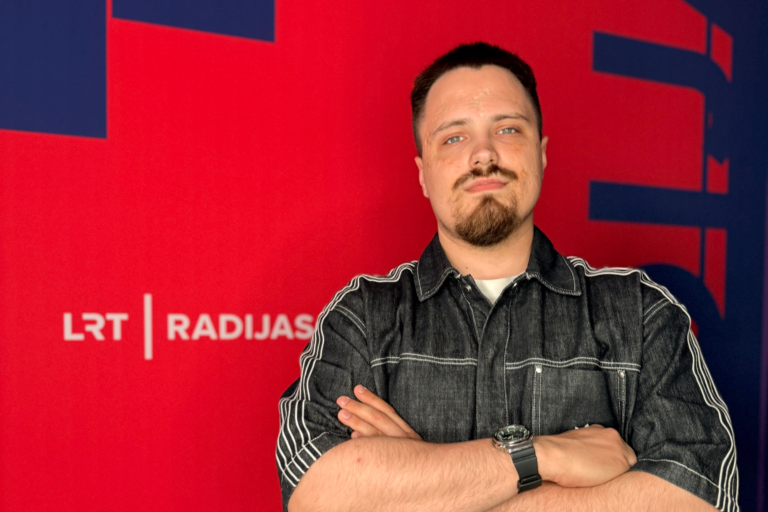
As the Head of Radio Engineering at LRT, I am responsible for ensuring that our radio and visual radio broadcasts run smoothly and reliably every day. My work includes coordinating engineering teams, maintaining the broadcast infrastructure, and resolving technical issues as they arise. At LRT, we manage four of our own radio channels : three FM-based stations that are also available on digital platforms, one fully digital station, and we additionally rebroadcast the BBC World Service for FM listeners in Lithuania.
I work with IP-based audio networks, digital consoles, and broadcast systems, as well as contributing to the implementation of new technologies and improving work processes. A large part of my job is to ensure that the entire technical system performs flawlessly, so that listeners and viewers receive the highest quality broadcasts.
How did your freelance experience help shape your career?
It strongly developed a big part of my soft skills. It taught me how to work under pressure, communicate and collaborate with many different kinds of people, and adapt to achieve the best possible result for everyone involved. Working across various events and projects, helped me gain confidence in both technical and psychological way.
What part of your work do you enjoy the most?
I love solving various technical challenges and seeing the results of long-term projects come to life in live broadcast.
I also enjoy combining technical knowledge and creativity to result higher quality in audio, video, or other broadcast infrastructure. Every day comes up with various, sometimes completely unexpected, challenges, that keeps the work interesting for me.
Do you have a favourite piece of equipment or software that you rely on the most?
I always tend to rely on Ableton Live, because of it’s simplicity and flexibility in music production. At work I’ve gained more knowledge about Dante and network systems that are based on Dante, since it’s a daily tool that me and my team have to work with every day. I enjoy working with Dante because it’s flexible, reliable, and highly customisable, especially in large broadcast environments.
What has been your biggest career highlight so far?
Biggest highlight is definitely becoming the Head of Radio Engineering here at LRT at a relatively early stage of my career. It really feels rewarding that I am trusted with technical operations for a national broadcaster and leading a team which is responsible for keeping broadcasts smooth every day.

What advice would you give to Spirit students who want to build a career in audio engineering or broadcasting?
Always stay in action where possible, take the first step wherever you can.
Don’t be afraid to fail when opportunities arise. Every session, especially in first years, helps a ton for you in the future. If you are not sure which road you’re heading for in Music/Audio, experiment with all the opportunities, and you will find the path that suits you best surely.
Don’t forget that technical skills are not 100% of your capabilities. In music industry you will meet all kinds of people, so learn your soft skills, and use them to your advantage. Learning to communicate, adapt and work under pressure will help you in your career a lot.
Most important, stay consistent and improve. In this industry, your experience, character and trust will matter a lot. Build it as soon as possible.
More alumni stories
Tom Ashby
James Watson
Interested in studying with us?
Click below to start your application, register for an open day or get in touch with any questions