Kelsey Brooks.
From live sound and touring, to broadcast and audio engineering at Formula One, Kelsey Brooks has built a diverse career across the live audio industry since graduating at Spirit Studios.
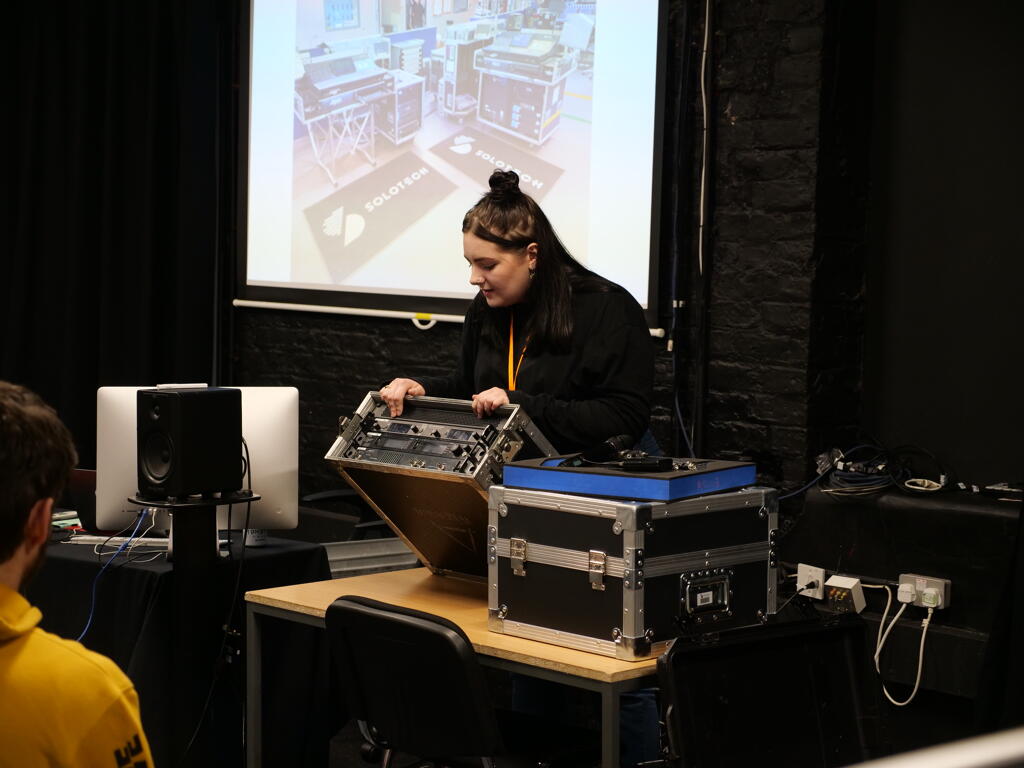
After studying Studio & Live Music Production at Spirit Studios and graduating with a First Class Honours, Kelsey Brooks has built a diverse career across live sound, broadcast, recording and touring. She has worked in a wide range of roles including PA and Systems Technician, Front of House, Monitors, Broadcast Engineer and Sound Guarantee, gaining experience across almost every corner of the live audio industry.
Today Kelsey works as an Audio Engineer for Formula One, having previously worked with Solotech UK alongside her freelance engineering career.
We caught up with Kelsey to discuss her journey from Spirit Studios to Formula One, the realities of working in live audio, and the advice she would give aspiring engineers looking to build a career in the industry.
How did you first get started in audio engineering, and what inspired you to pursue it as a career?
I was always a very musical kid, like most audio engineers! I was lucky enough to grow up in Manchester; we have an incredible music history and you can find really talented musicians and live music everywhere, which was what inspired me to get into the music industry.
I’ve also always been very interested in science and engineering, and audio engineering is a perfect mix of music and physics. I started mixing tiny shows and gradually took bigger gigs, and now I’ve been doing this job for almost 11 years.
You studied Studio and Live Music Production at Spirit and graduated with a First Class degree. How did your time here help prepare you for working in the industry?
My degree was a massive step in preparing for what I do now. The course covered everything from the foundational aspects of sound (e.g. psychoacoustics and sound wave theory) to working on huge shows (one of my final projects was designing a PA system for the Etihad Stadium).
My tutors gave me so much support and really encouraged me to step out of my comfort zone.
I ended up doing a lot of hands-on work during my degree which directly led to employment afterwards. I got so many freelancing gigs from the venues I shadowed at during Work Based Learning. I also worked for the PA company Solotech before I moved to my current role, and that was a connection I made through my tutors at Spirit Studios. I still work with a lot of the engineers I met during my degree today!
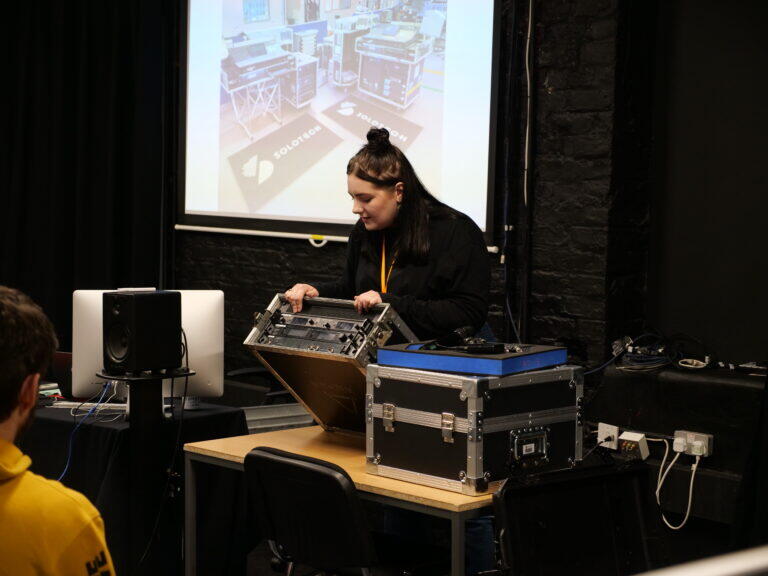
You’ve worked across live sound, broadcast, and studio production. Which part of audio engineering do you enjoy the most?
I honestly love it all, but I work almost entirely in broadcast now. It’s very high-pressure and technically challenging work, and you have to think about a lot of things you wouldn’t consider in live sound – there are so many people talking to you on comms, you’re always trying to match the ambience of the camera shot, and in live broadcast you never quite know what’s coming next.
I have always loved the feeling of a live show though – whether it’s a massive arena or a 100 cap venue, live music is what made me become a sound engineer and it’s always been really special to me. I love being in a room filled with loud music and seeing the crowd dancing – I still find it strange when I mix a show for broadcast and the audience aren’t in the room with me!
What has been your biggest career highlight so far?
The first year I worked for F1, I mixed 3 days of shows for the giant screens at Silverstone for the British Grand Prix.
I loved watching F1 as a kid (and as an adult!) and getting to mix some really loud cars and a tonne of music was really, really fun. There were around 480,000 guests listening to my mix over that weekend, which is the biggest show I’ve ever done. I got to bring my family down too which made it really special, because it’s not often in this kind of job that you get to bring your family to work!
What piece of equipment or software do you rely on the most in your work?
This answer is kind of cheating because I can’t narrow it down to one, but any kit or software to do with audio routing/networking.
One of the most important parts of being an audio engineer is being able to understand how you’re transporting audio. Protocols/standards/technologies like MADI, Dante, Ravenna, and Optocore are used everywhere and if you don’t understand how they work, you get stuck very quickly when trying to work out why bits of kit aren’t connecting to each other or passing audio!
If I really can only pick one thing though, it would be my Sound Bullet. It’s a cable and phantom power tester with a sine wave and pink noise generator – it’s a really helpful pocket tool to fault-find signal flow.
Live sound can be a high-pressure environment. What skills do you think are important for engineers working at live events?
Resilience and empathy. I think there are moments when you feel a bit battered; everything goes wrong, people are shouting, and you feel a bit mentally fried. In those moments you’ve just got to swallow the feelings, focus on what you need to do and bounce back from the emotions and the chaos.
Then when things do go wrong it is important to recognise your mistakes, but once you’ve corrected and/or learned what you can from them, you’ve got to brush it off.
That’s kind of where empathy comes in too – other people will get things wrong, and you have to remember that everyone’s just trying their best to get the job done as well as they can. Being able to apologise and give people a bit of grace goes a really long way.
We all owe it to each other to make this industry a nice place to work!
I also really strongly advocate for touring crew to look out for each other and their own mental health, because we work in a really demanding industry. I highly recommend reading Touring and Mental Health by Tamsin Embleton – it’s a real deep dive into the skills we can develop to support our own and each other’s mental health on the road.
What advice would you give to students who want to build a career in live sound or audio engineering?
Take every single opportunity presented to you.
Whether it’s a gig, a project, a conversation, a networking or trade event. I did loads of random things in the early stages of my career. I worked in an acoustic lab in Copenhagen, spent a summer catching trains around the country to work at different festivals, and even did a brief stint in Artist Liaison.
It’s how you find out what you like and what you’re good at. Even if you never do it again, it usually makes for a fun story!
Where can we find your work profile?
LinkedIn: Linkedin.com/in/kelsbrooksengineer
More alumni stories

Aaron Asenso
Tom Leach
Interested in studying with us?
Click below to start your application, register for an open day or get in touch with any questions