
Hardik Keshan.
From Spirit Studios to international arenas, Hardik has built an impressive live sound career, working with legendary artists through dedication, technical expertise and a commitment to learning.
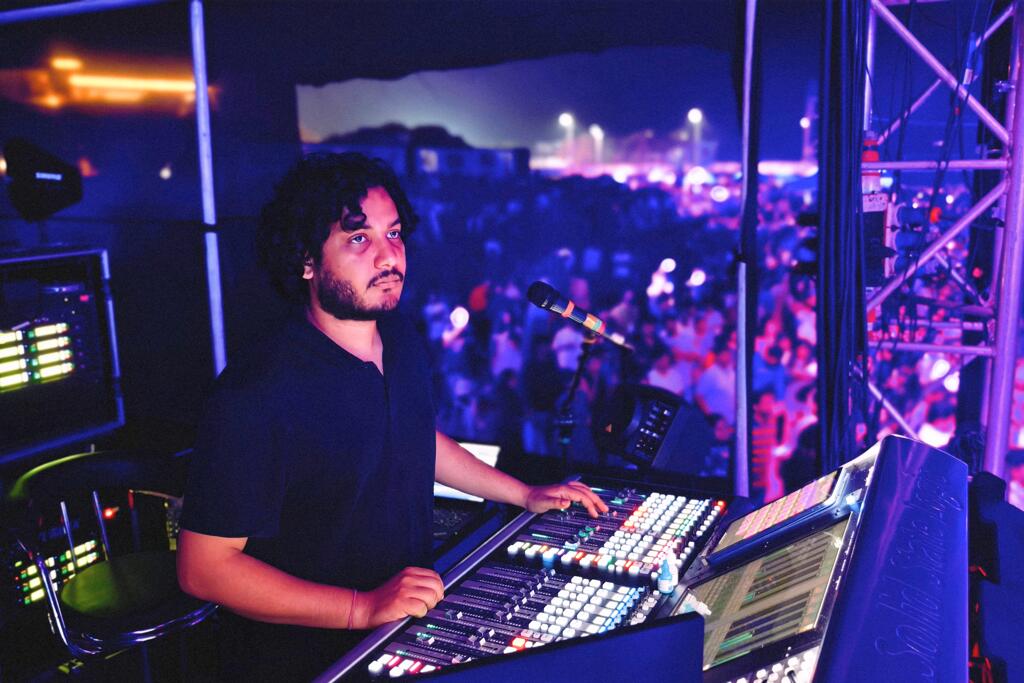
From studying audio engineering at Spirit Studios in Manchester to mixing sound for internationally touring artists, Hardik Keshan has built a career in live sound through technical skill, determination and a commitment to continuous learning.
Between 2019 and 2020, Hardik completed three industry courses at Spirit Studios, gaining a broad foundation in studio production, mastering, live sound and applied audio engineering. Returning to India just as the COVID-19 pandemic brought the live-events industry to a standstill, he faced an uncertain start to his career. Through continued training, networking and a determination to make the most of every opportunity, he gradually established himself in the industry.
Today, Hardik works internationally as a freelance front-of-house and monitor engineer, touring with artists including Sid Sriram, Prateek Kuhad and Indian Ocean across India, the UK, Singapore, Malaysia and the UAE.
We caught up with Hardik to discuss his journey from Jaipur to international touring, the role Spirit Studios played in his development, and the lessons he has learned along the way.
Could you tell us about your current role as a freelance studio and live sound engineer?
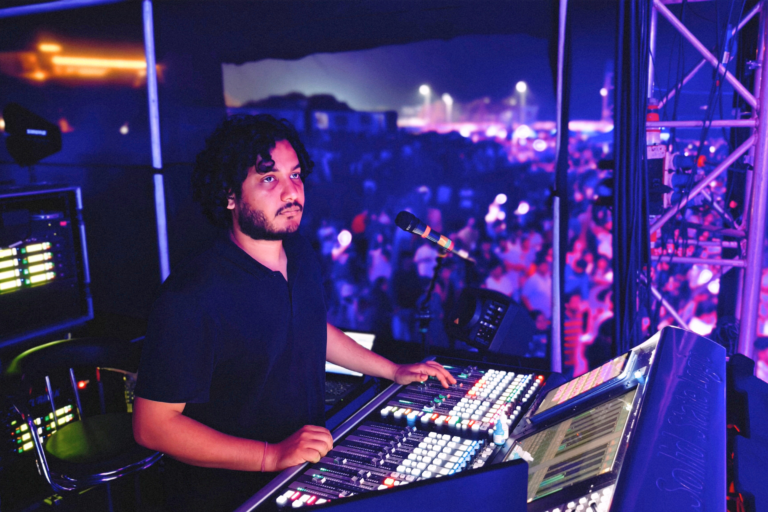
My career today is centred primarily on live sound. I work internationally as a freelance FOH and monitor engineer, touring with artists across India, the UK, Singapore, Malaysia, UAE and other markets.
I work as a monitor engineer for Sid Sriram and Prateek Kuhad, while with Indian Ocean I regularly handle both FOH and monitors, depending on the requirements of the production. These are two very different responsibilities. At FOH, my job is to translate the artist’s musical identity into a powerful, detailed and consistent experience for the audience. On monitors, my responsibility is to create a dependable environment in which every musician feels comfortable, connected and confident enough to perform at their best.
A large part of touring happens before reaching the console. I prepare show files, study the technical information, coordinate with production teams and local vendors, ask questions in advance and plan for the unexpected.
My studio and Pro Tools background continues to support my editing, playback and critical-listening skills, but live sound is firmly the main focus of my career.
What first inspired you to pursue a career in audio engineering and live sound?
I have always been fascinated by sound consoles, loudspeakers and the electrical systems behind them. Even while studying electrical engineering, I was naturally drawn towards understanding how audio equipment worked and how electrical principles could be applied creatively.
My engineering background made the transition into live sound easier because I already had an interest in signal flow, electronics, systems and problem-solving. However, live sound added something beyond the technical side: it allowed me to use that knowledge in service of music and human emotion.
I became fascinated by how a console, loudspeaker system or small technical decision could completely change the way a performance was experienced.
In live sound, there is no second take. You must understand the system, listen carefully, make decisions in real time and work closely with many different people.
That combination of engineering, music, pressure and teamwork made me realise that this was the career I wanted to pursue.
You completed several courses with us, what made you choose to study with Spirit Studios?
Being based in India, the only practical way for me to evaluate schools abroad was through detailed online research. I spent more than six months comparing institutions, reading what current and former students said, studying the equipment lists, looking at the teaching environment and understanding how open each institution was to giving students genuine access.
Spirit Studios consistently stood out. It was highly regarded for its openness towards students, the quality of its tutors and the availability of professional equipment.
The feedback from the wider audio community was positive, and it appeared to be a place where students were encouraged to use the facilities rather than simply observe them. I ultimately chose Spirit because it offered the combination I was looking for: experienced tutors, excellent equipment, a supportive environment and the freedom to learn practically.
From 2019 to 2020, I completed three industry courses simultaneously under a special arrangement: Studio Production & Mastering, Music Production & Sound Engineering, Live Sound Engineering, Applied Sound Engineering I received a Merit in all three. It was an intensive experience, but it gave me a broad foundation across studio production, live sound and applied audio engineering.
Looking back, what did you enjoy most about your time studying with us?
The two things I valued most were the tutors and the access to equipment.
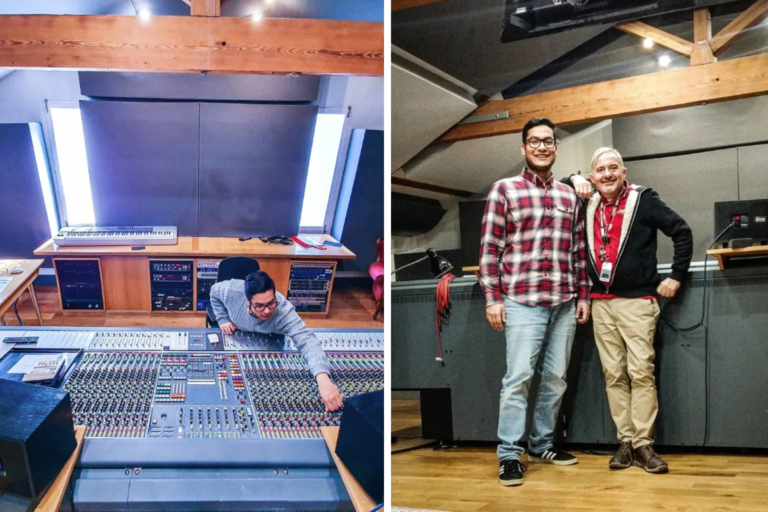
Steve Boyce-Buckley was the best mentor I have had during any period of my education. He genuinely cared about his students while always treating us with respect. He encouraged me to think independently, understand why something worked and learn constructively when it did not. That balance of knowledge, patience and respect had a lasting effect on me.
Because I was completing three industry courses simultaneously under a special arrangement, I had a large number of studio-booking credits. I used them fully. I spent weekdays and weekends in the studios, practising, experimenting and learning from every mistake.
Nobody at Spirit stopped you from learning. If you were motivated and willing to put in the time, the facilities and support were available. That freedom taught me discipline and self-reliance. It also helped me understand that progress in audio comes from repeated practice: setting something up, listening carefully, recognising what is wrong and trying again until you understand it properly.
Since completing your studies here, what has your journey in the audio industry looked like?
I arrived back in India during the first week of March 2020. The following week, the COVID lockdown began and the live-events industry effectively shut down. It was possibly the most difficult time to begin a career as a live-sound engineer.
There were no normal shows, tours or opportunities through which a new engineer could gradually enter the industry. I had to find another way forward. I kept my head down, continued learning and accepted that the journey would require patience. There were periods when I worked up to 16 hours a day, attended as many technical trainings as possible and made a conscious effort to meet people throughout the industry.
Networking and word of mouth are extremely important in live sound. People need to know not only that you understand the equipment, but also that you are dependable, prepared and good to work with.
I focused on proving those qualities one opportunity at a time. That gradual work eventually developed into touring across India and internationally, including the UK, Singapore, Malaysia and Dubai.
Today, I work with artists including Sid Sriram, Prateek Kuhad and Indian Ocean, handling monitor and FOH responsibilities across concerts, festivals and arena productions.
You’ve worked across live sound, studio engineering, festivals, concerts and touring productions. What have been some of the most memorable projects you’ve worked on?
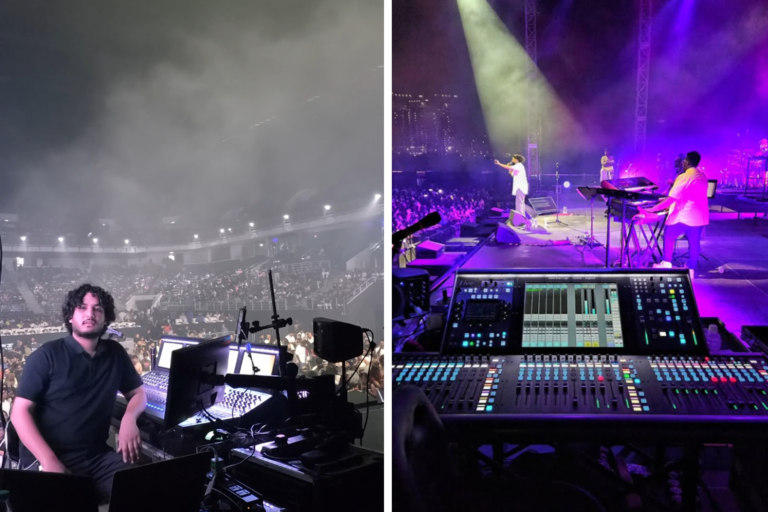
Mixing monitors for Sid Sriram at The O2 in London is one of the biggest highlights of my career.
The scale and reputation of the venue made it a very special occasion, but the responsibility remained the same: ensuring that the artist and musicians felt comfortable, connected and able to perform confidently.
Touring as monitor engineer for Prateek Kuhad has also been extremely rewarding. His music relies heavily on detail, dynamics and intimacy. Preserving those qualities across different rooms, systems and countries requires careful listening and a strong understanding of what the artist needs onstage.
With Indian Ocean, I regularly work across both FOH and monitors. Their music combines many different textures, instruments and dynamic changes, which makes every show technically and musically engaging.
Working towards Coca-Cola Arena in Dubai is another significant milestone. Other memorable projects include mixing FOH for Boney M and monitors for Richard Marx on major one-off productions, as well as festival work including Cherry Blossom Festival 2024 and Me•Gong Festival 2025.
Each project has taught me something different about preparation, artist communication, adaptability and teamwork.
What has been a standout achievement in your career so far?
Mixing at The O2 in London with Sid Sriram is the achievement I am most proud of so far.
The venue itself is iconic, but the moment was meaningful because of the journey behind it. I was a boy from Jaipur who travelled to Manchester to learn from some of the best people and facilities available to me. I then returned to India just as the live-events industry shut down because of COVID. There was no clear path forward, but I continued learning, meeting people and working my way through every opportunity that became available.
Reaching The O2 was therefore more than another show. It represented the years of preparation, uncertainty, long days, technical training and relationship-building that came before it.
At the same time, I do not consider success to be defined by one venue. The greater achievement is earning enough trust for artists and production teams to take me around the world with them. When an artist trusts me with their monitors or their sound in front of an audience, that responsibility means more than the size of the venue.
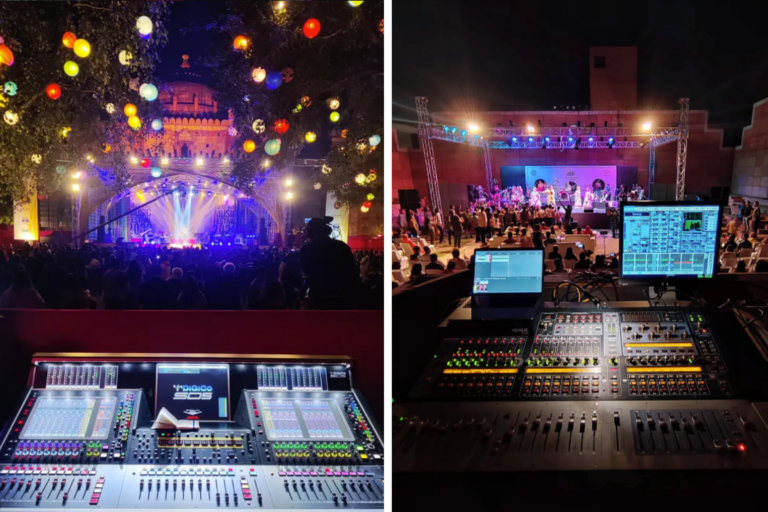
Do you have a favourite piece of equipment or software that you enjoy working with?
I am currently working primarily on the Avid VENUE S6L platform, which I enjoy because of its workflow, integration and flexibility for touring productions.
My training and experience with Avid Pro Tools at Spirit Studios have always been a strong point for me, so the connection between the S6L and Pro Tools environment feels natural. I also regularly enjoy working on the DiGiCo Quantum 338 and the Allen & Heath dLive S7000.
Each platform has its strengths, and I believe a touring engineer should be adaptable rather than dependent on a single console.
The important thing is being able to move between systems while maintaining the artist’s sound and the consistency of the show. For loudspeaker systems, my preferred PA is the d&b audiotechnik KSL. I appreciate its clarity, control, consistency and predictable behaviour. My training at d&b’s headquarters in Backnang, Germany, also gave me a deeper understanding of the system rather than simply knowing how to operate it.
You’ve also trained with several audio manufacturers, how important has continuing professional development been throughout your career?
Continuing professional development has been essential.
Live-sound technology develops constantly, and touring engineers regularly encounter different consoles, networks, wireless systems and loudspeaker platforms. Training directly with manufacturers provides a much deeper understanding than learning only the basic operating workflow.
My manufacturer training includes:
- System Design & Optimization – Meyer Sound, 2024
- Low Frequency Control – Meyer Sound, 2023
- Portable System Deployment – Meyer Sound, 2023
- d&b Sound System Optimisation Seminar – d&b audiotechnik, 2023
- d&b Soundscape Workshop – Backnang, Germany, 2023
- d&b Networkshop – Backnang, Germany, 2023
- Additional training with DiGiCo in the UK
- SSL training in the UK Allen & Heath training in the UK
- Training with Shure and Avid and a lot of others.
The value is not simply collecting certificates. Proper training helps me prepare better, ask more informed questions, build reliable redundancy and troubleshoot quickly when something unexpected happens.
It also allows me to communicate more effectively with system engineers, local vendors and technical crews. In a touring environment, the ability to arrive at an unfamiliar system and understand it quickly is extremely important. I consider every training course, tour and show another opportunity to improve.
What advice would you give to students hoping to work in live sound or audio engineering?
Be prepared. Do your homework before the show, prepare your file properly and ask every important question before you take your flight – not after you arrive at the venue.
Understand the artist, the input list, the system, the local production and the possible limitations in advance. Learn the fundamentals before becoming attached to a particular console or brand. Signal flow, gain structure, phase, acoustics, loudspeaker behaviour, networking, RF and critical listening will remain useful regardless of the equipment in front of you. People skills are equally important.
You must give artists, production managers and crew members a reason to trust you. That trust comes from being calm, prepared, honest and consistent. If you do not know something, ask. If you make a mistake, acknowledge it, learn from it and do not repeat it.
Live sound is heavily driven by networking and word of mouth. Be nice to people, respect every department and do your work properly. People remember the engineer who remains calm under pressure and helps the entire production succeed.
My own journey began in Jaipur, took me to Manchester and then brought me back to an Indian live-events industry that had completely shut down. I still found a way forward.
Everything is possible if you remain humble, work hard, keep learning and stay prepared when an opportunity arrives.
How can we find you online?
The best places to follow my work are:
LinkedIn: linkedin.com/in/hardikkeshan
Instagram: @hardikkeshan
I make a conscious effort to keep my Instagram updated with relevant touring work, technical experiences and professional milestones. I also use it to discover and connect with like-minded engineers, artists and people working throughout the live-production industry.
More alumni stories

Dr Bon Holloway
Aaron Asenso
Interested in studying with us?
Click below to start your application, register for an open day or get in touch with any questions